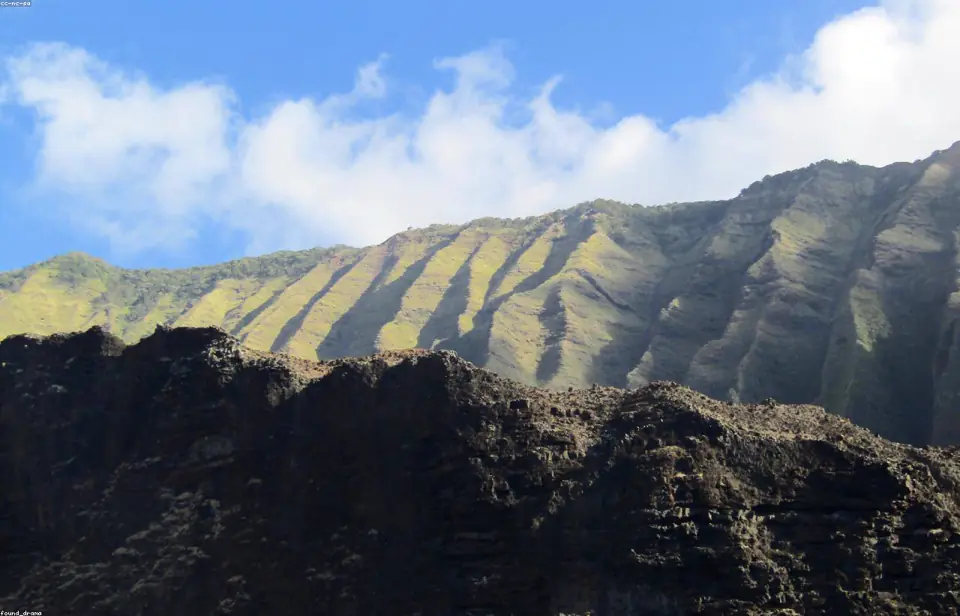
Why this side is so green
Windward means facing the wind. On Oʻahu the trade winds blow from the northeast most of the year, carrying moisture into the Koʻolau range. The mountains catch the rain, and the result is a coast painted in every shade of green: rainforest ridges, taro patches, banana farms and lawns that run down to the sand.
The cliffs are what remains of an ancient volcano, carved by rain into vertical folds so that the whole range looks like a green curtain. Every valley has its own name and stories.
Kualoa and Mokoliʻi
At the northern end of the coast is Kualoa, land so sacred in old Hawaiʻi that passing canoes lowered their sails. Just offshore is Mokoliʻi, the cone-shaped islet that Hawaiian tradition says is the tail of a moʻo defeated by the goddess Hiʻiaka. The valleys behind Kualoa have appeared in many films.
Bays, beaches and farm stands
Kāneʻohe Bay glows in bands of jade and turquoise over its reef, and Waimānalo Beach runs for miles of soft sand beneath the cliffs. The food here is farm-country simple: a macadamia nut farm, roadside stands and plate-lunch spots in Kāneʻohe and Kailua.
Tour stops on this coast
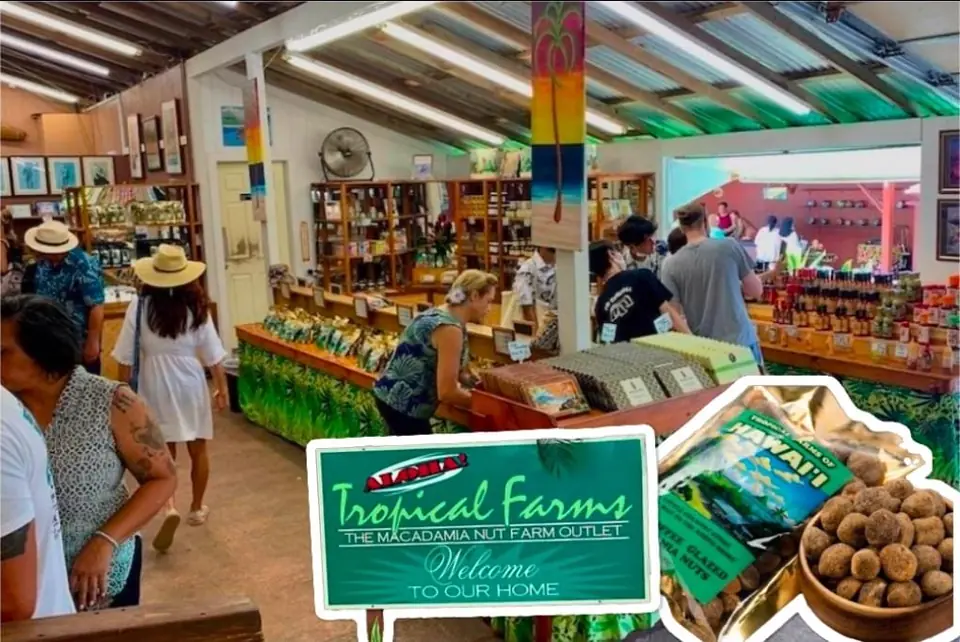
Macadamia Nut Farm
Roasted macadamia nuts, coconut coffee and local gifts under the Koʻolau cliffs.
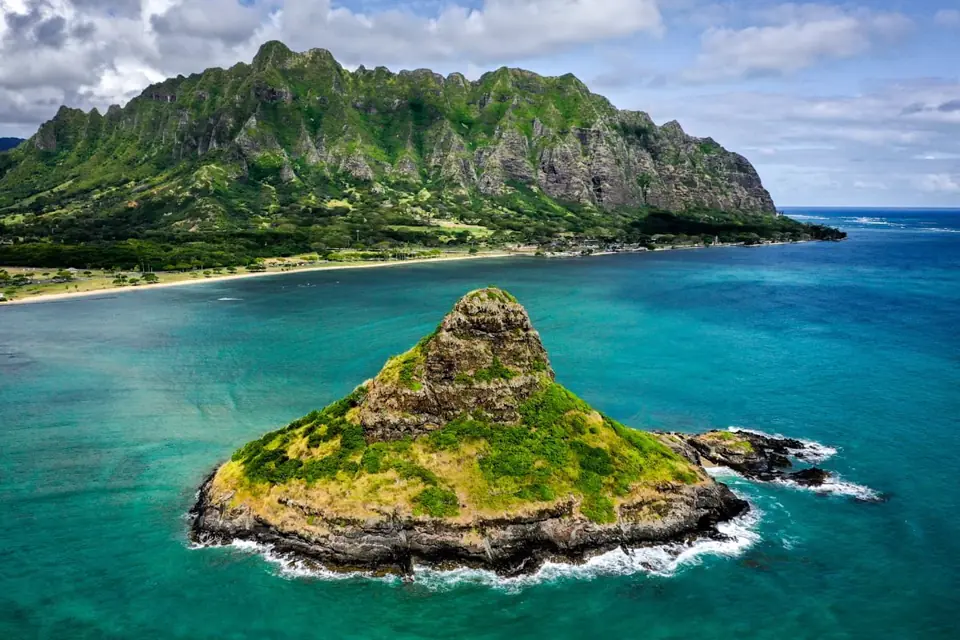
Mokoliʻi Island
The cone-shaped islet off sacred Kualoa, wrapped in the legend of Hiʻiaka and the moʻo.
The tour also passes Waimānalo, the Kāneʻohe Bay shoreline and Kaʻaʻawa.